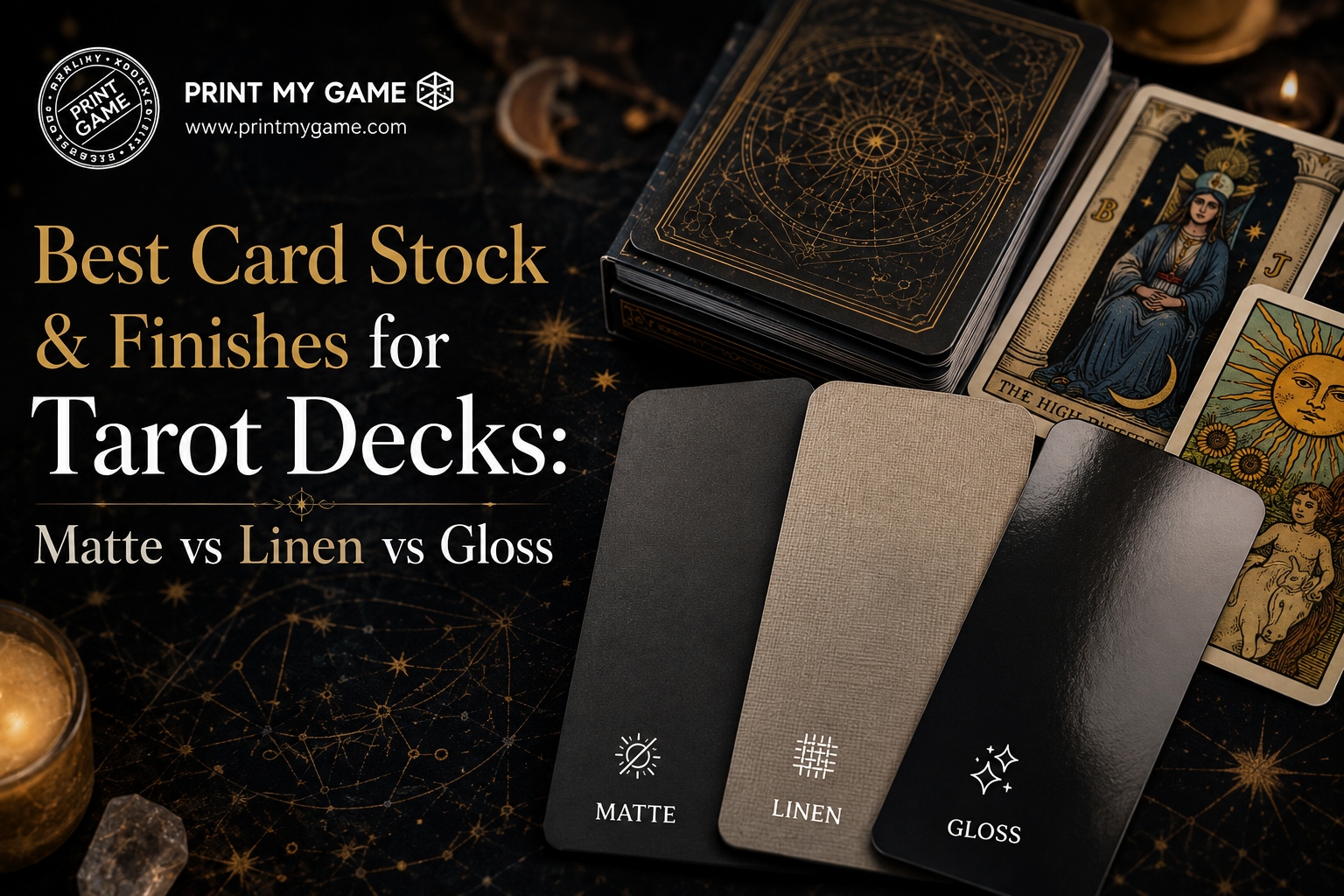
Best Card Stock & Finishes for Tarot Decks: Matte vs Linen vs Gloss
Choosing the right card stock and finish can make a noticeable difference in how a tarot deck looks, feels, shuffles, and holds up over time. A beautifully designed deck can lose some of its appeal if the cards feel too thin, become difficult to handle, or have a finish that creates distracting glare.
For creators developing a tarot deck, the decision usually comes down to more than appearance. Card stock affects durability and handling, while the finish changes the texture, visual presentation, and overall experience of using the deck.
Among the most common choices are matte, linen, and gloss finishes. Each has its strengths, and the best option depends on how the deck will be used, the artwork style, and the experience you want readers to have.
This guide explains the differences between these options and how to choose the right combination for your tarot deck.
Why Card Stock and Finish Matter for Tarot Decks
Tarot cards are handled repeatedly. They are shuffled, spread across tables, picked up, turned over, and stored in boxes between readings. That means the physical construction of the deck is almost as important as the artwork printed on it.
The right card stock should provide enough structure for comfortable handling without making the deck unnecessarily bulky. A suitable finish can also protect the printed surface while influencing how easily cards slide against each other.
For example, a deck designed for frequent readings may benefit from a practical, low-glare surface. A collector-focused deck, on the other hand, may prioritize rich colors and a more premium visual appearance.
When planning tarot card printing, think about the complete user experience rather than choosing a finish based only on how it looks in a product photograph.
Understanding Card Stock for Tarot Cards
Card stock is the material that gives each card its structure and strength. The thickness and construction can affect flexibility, durability, shuffling, and how substantial the deck feels in the hand.
There is no single card stock that is perfect for every tarot project. A professional reader who uses a deck daily may have different requirements from an artist producing a limited-edition collector deck.
A good tarot deck generally needs to balance three things:
- Durability for repeated handling
- Flexibility for comfortable shuffling
- Enough rigidity to prevent cards from feeling flimsyCard thickness should also be considered together with the number of cards in the deck. A thicker stock may feel luxurious, but a large deck can become difficult to shuffle if every card is too rigid.
Matte Finish: Soft, Elegant, and Low-GlareMatte is one of the most practical choices for tarot decks. Its non-glossy surface reduces reflections and gives the cards a smooth, understated appearance.
This can be especially useful when tarot cards are used under bright lights or photographed frequently. The reduced glare makes artwork easier to view from different angles.
Benefits of matte tarot cards
- Minimal glare during readings
- Clean and sophisticated appearance
- Comfortable, understated surface
- Works well with detailed artwork
- Suitable for frequent handling
Matte finishes can be particularly effective for decks featuring muted colors, spiritual themes, illustrations, or sophisticated typography.
The trade-off is that matte surfaces may not produce the same strong visual shine or color intensity associated with gloss. If your artwork depends heavily on vibrant highlights and highly saturated colors, another finish may create a more striking presentation.
Linen Finish: Texture and a Premium Feel
Linen finishes are known for their subtle textured surface. The texture can provide a distinctive tactile quality, making the cards feel different from a standard smooth finish.
For tarot decks, this can be an attractive choice when the physical feel of the cards is an important part of the experience. The textured surface can also give a deck a classic, crafted character.
Benefits of linen tarot cards
- Distinctive tactile texture
- Premium and traditional appearance
- Comfortable grip during handling
- Adds character to the physical deck
- Works well for artistic and specialty decks
Linen can be a strong option for creators who want their deck to feel substantial and thoughtfully produced rather than simply printed.
However, texture can slightly change how artwork appears compared with a very smooth surface. Fine details and subtle gradients should therefore be considered during the design stage.
Gloss Finish: Vibrant and Visually Striking
Gloss finishes create a smooth, reflective surface that can make colors appear bright and visually prominent.
If your tarot artwork uses bold colors, strong contrast, metallic-style effects, or dramatic illustrations, gloss can help create an eye-catching presentation.
Benefits of gloss tarot cards
- Strong visual impact
- Smooth surface
- Bright-looking colors
- Attractive for highly detailed artwork
- Creates a polished appearance
The main drawback is glare. Under direct lighting, reflections can make parts of an illustration harder to see. This may matter if the deck is intended primarily for readings rather than display.
Gloss can therefore be a better fit for decks where visual presentation is a major priority and lighting conditions can be controlled.
Matte vs Linen vs Gloss: Which Is Best?
There is no universal winner. Each finish creates a different balance between appearance, texture, and practicality.
| Finish | Best For | Main Advantage | Potential Drawback |
| Matte | Everyday tarot readings | Low glare and clean feel | Less visual shine |
| Linen | Premium or artistic decks | Textured, distinctive feel | Texture can affect fine details |
| Gloss | Vibrant artwork and display | Bright, polished appearance | More glare |
| Matte + quality card stock | Frequent use | Balanced handling and appearance | Less dramatic finish |
| Linen + quality card stock | Specialty decks | Premium tactile experience | May feel different from smooth cards |
| Gloss + quality card stock | Collector-focused designs | Strong visual impact | Reflections under bright light |
How to Choose the Right Finish for Your Tarot Deck
The best way to choose is to start with the purpose of the deck.
1. Consider how the deck will be used
Will people use it every day, occasionally, or primarily keep it as a collector’s item?
For regular readings, a practical finish such as matte may be preferable. For a limited-edition deck where presentation matters most, gloss or linen could be worth considering.
2. Look at your artwork
Study your artwork carefully.
Does it contain subtle gradients and fine linework? A finish that preserves visibility and reduces distracting reflections may be preferable.
Does it use bold colors and dramatic illustrations? Gloss could enhance its visual impact.
Does the artwork have an antique, handmade, or traditional aesthetic? Linen may complement that style.
3. Think about shuffling
A tarot deck should feel comfortable when shuffled. The interaction between card stock and finish can influence how cards slide, separate, and stack.
If possible, test physical samples before committing to a large production run.
4. Consider lighting conditions
A deck used by professional readers may be handled under different lighting conditions. If glare could interfere with seeing the artwork, a low-reflection finish can be a practical choice.
5. Consider the number of cards
The thickness of individual cards becomes more important as the deck gets larger. A very thick stock can create a bulky deck that is harder to shuffle.
The goal is to find a balance between durability and flexibility.
6. Order samples when possible
Digital artwork can look very different once printed. Before finalizing your tarot deck, physical samples can help you evaluate color, texture, thickness, flexibility, and handling.
This is also a good stage to review your files against the printer’s artwork guidelines before production.
Common Mistakes to Avoid
One of the most common mistakes is choosing a finish based purely on appearance.
A finish may look impressive in photographs but perform poorly during repeated readings. Another mistake is overlooking card thickness. A beautiful finish cannot compensate for cards that are uncomfortable to handle.
Creators should also avoid making design decisions without considering how the finished cards will actually be used.
Other mistakes include:
- Choosing excessive thickness for a large deck
- Ignoring glare when using glossy surfaces
- Failing to test small text and fine artwork
- Designing only for screen appearance
- Skipping physical samples
- Treating card stock and finish as separate decisions
The best tarot deck printing decisions consider all these factors together.
Tips and Best Practices for Tarot Card Printing
Start by defining the purpose of your deck. Decide whether it is intended for daily readings, gifting, retail sales, collectors, or a combination of these uses.
Next, review your artwork at the actual card size. Details that look clear on a large monitor may become less noticeable when printed.
Keep important artwork and text away from trim edges and follow the printer’s file requirements. This helps reduce avoidable production problems.
Most importantly, evaluate the finished deck as a physical product. Hold the cards, shuffle them, spread them on a table, and look at them under different lighting. The right choice should feel good in actual use, not simply look good on a screen.
For creators looking for custom tarot cards, these decisions can be considered as part of the overall deck production process.
Quick Answer: What Is the Best Finish for Tarot Cards?
For most tarot decks designed for regular readings, matte is a strong all-around choice because it reduces glare and provides a clean, practical surface. Linen is a good option when texture and a premium tactile feel are priorities, while gloss works well for colorful, visually striking artwork where shine is desirable.
The best choice ultimately depends on your artwork, intended use, card thickness, and desired user experience.
FAQs About Tarot Card Stock and Finishes
What card stock is best for tarot cards?
The best card stock balances durability, flexibility, and comfortable handling. The ideal thickness depends on the deck size, intended use, and printing specifications, so physical samples are useful before production.
Is matte or gloss better for tarot cards?
Matte is generally better for reducing glare during readings, while gloss can create a brighter and more polished visual appearance. Choose based on whether handling or visual impact is the bigger priority.
Are linen tarot cards good for everyday use?
Yes. Linen can provide a distinctive textured feel and can work well for frequently handled decks. However, the texture should be evaluated with your artwork because it may affect how very fine details appear.
What is the difference between matte and linen tarot cards?
Matte typically provides a smooth, non-reflective surface, while linen has a subtle texture. Matte emphasizes practicality and low glare, whereas linen adds a more tactile and distinctive character.
Does card thickness matter for a tarot deck?
Yes. Thickness affects flexibility, durability, deck size, and shuffling. A thicker card is not automatically better; the ideal choice depends on how many cards are in the deck and how it will be used.
Should I test tarot cards before placing a large order?
Yes. Physical samples allow you to evaluate the printed colors, finish, texture, flexibility, and handling before committing to full production. This can help identify issues that are difficult to spot on a computer screen.
Conclusion
The best card stock and finish for a tarot deck depends on the experience you want to create. Matte offers practical, low-glare handling; linen adds texture and a premium tactile character; and gloss delivers a bright, polished appearance.
Rather than asking which finish is universally best, consider how your artwork, deck size, audience, and intended use work together. Testing samples and evaluating the cards physically can make the final decision much easier.
With the right combination of design, card stock, and finish, creators can turn a set of illustrations into a tarot deck that feels as considered as it looks. Print My Game provides custom tarot card production options for creators who want to bring their deck concepts into physical form.